

University scholars Tomas Lehecka (Finland) and Jan Östman (Helsinki) often hear their linguist colleagues lament about how little the general public knows about language.
Truly, almost everyone speaks at least a language, but not everyone knows very much about language. Linguists lament this situation so often:
How can people whose social interaction heavily relies on language know so little about language and even less about linguistics, the discipline that studies the structure and forms of human language?
From sounds to sentence to meaning, linguists have been in the business of unraveling the mystery called language. They have been in the business longer than anyone could remember.
People tend to ask linguists ‘what is linguistics?’ — never ‘what is language?’ — as if everyone knows what language really is. Linguists themselves have a hard time defining language, talk less of the general public. 😕
If people come to understand how complex language is as well as be able to answer some language-related questions, maybe we are close to arousing deserved interest in linguistics.
In a recent study, Lehecka and Östman come up with a survey asking linguists around the world what they think everyone should know about language. 3,349 responses were gathered from 536 linguists across at least 49 countries within approximately 4 months.
From the United States to Switzerland to Nigeria, linguists put forward open-ended questions that the general public should be able to answer.
Linguists pose questions that you should know as a language user. For instance, who is a native speaker?.
Everyone cares about human rights, but do you know what human language rights are?
Questions that have featured greatly in linguistics textbooks also unsurprisingly pop up:
Is written language more correct than spoken language? Is it important that everybody speaks using correct grammar? Why do people have different accents?
One question which might seem quite straightforward to answer but has been a subject of hot-debate among scholars interested in language is:
Are all babies born with the capacity to use a language?
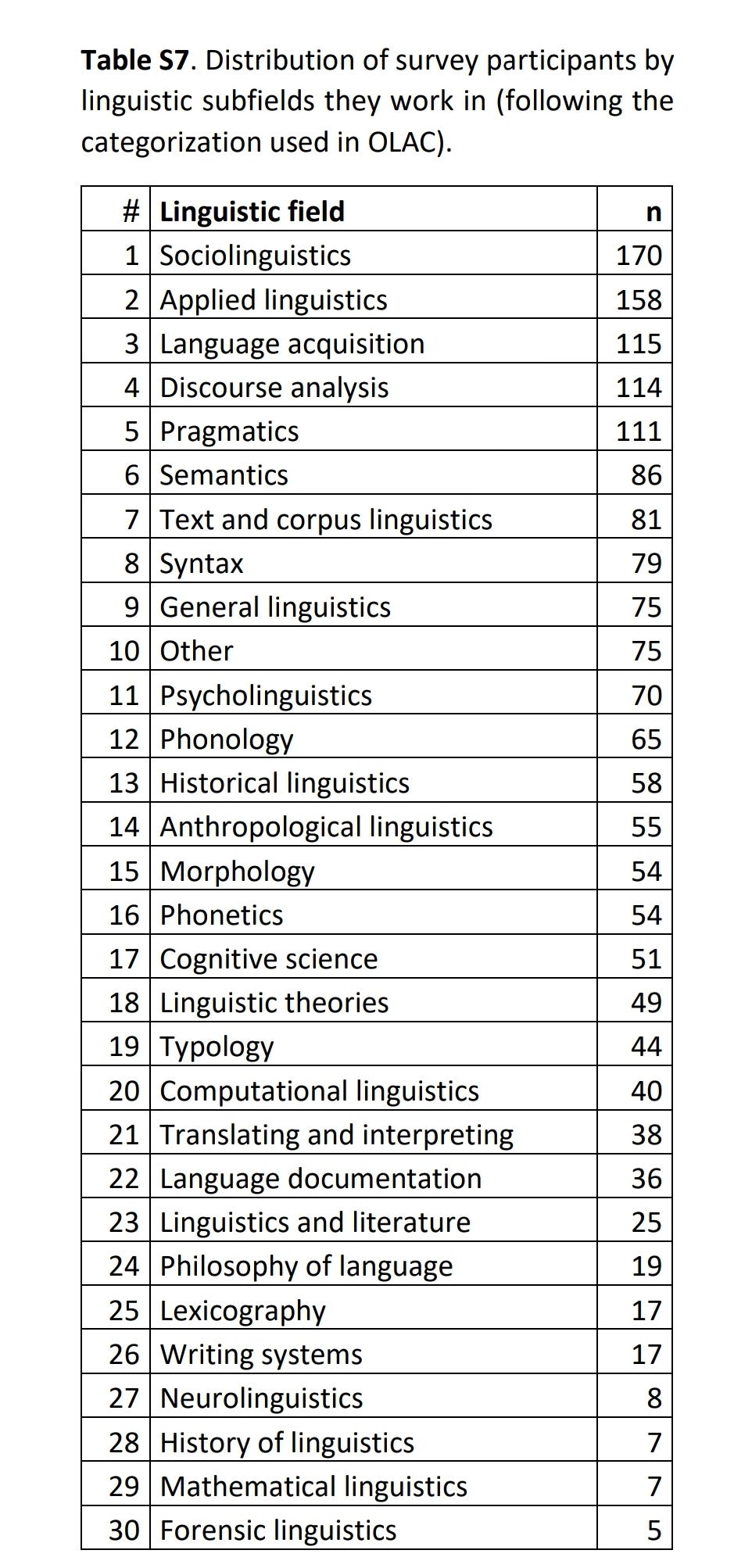
The questions come from linguists across different subfields of linguistics, top five include sociolinguistics, applied linguistics, language acquisition, discourse analysis and pragmatics.
Categories
Lehecka and Östman categorise the responses into macro-questions, topics & themes.
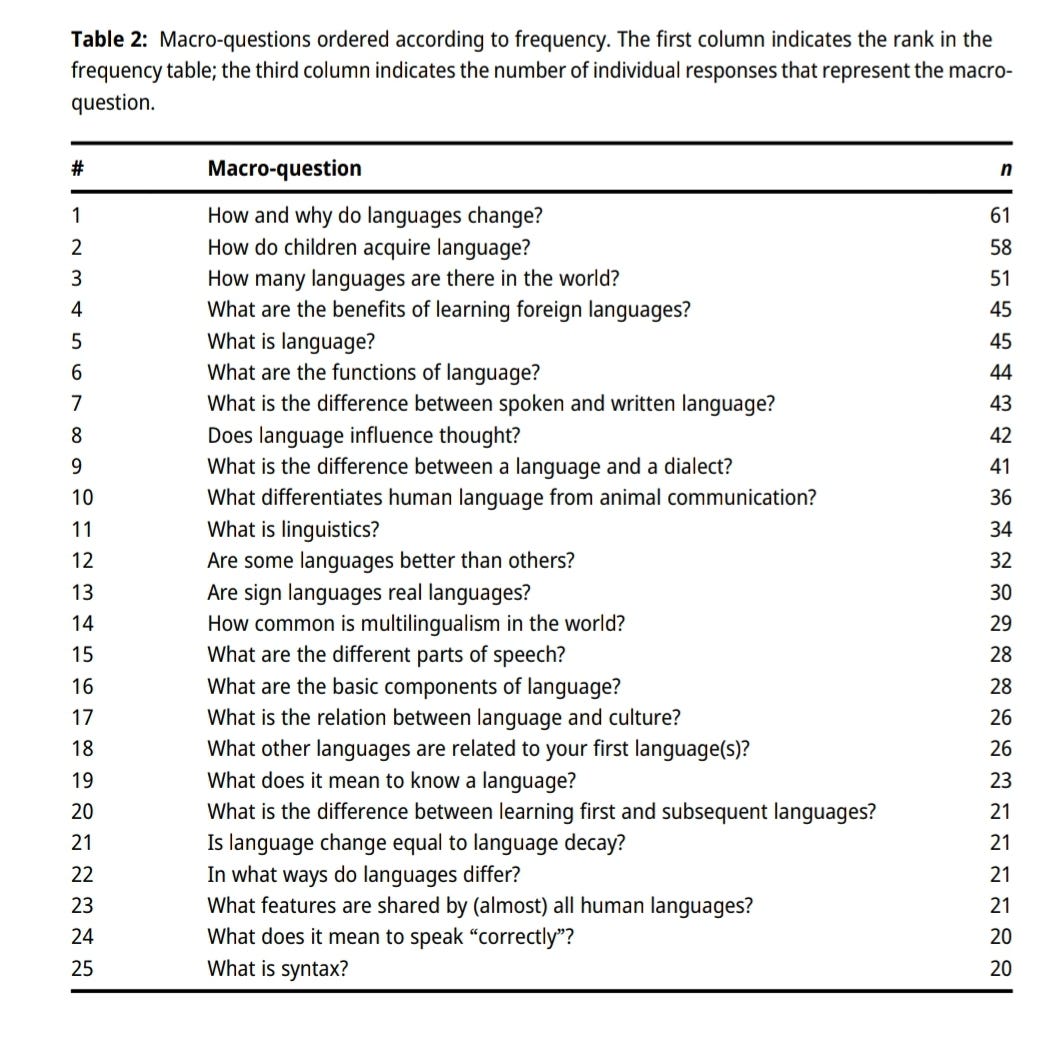
“The three most frequent macro-questions concern language change, language acquisition, and the number of languages in the world, respectively, reflecting broad disciplinary interests rather than a narrow thematic focus”, the scholars write.
“Thus, when linguists are asked what everyone should know about language, their responses encompass multiple domains of linguistic inquiry rather than coalescing around a single perspective.”
Also, the frequencies of the topics capture the different levels of linguistic analysis, namely, phonetics/phonology, morphology, syntax, semantics and pragmatics.
However, the scholars report that “issues related to the social dimension of language (such as language discrimination and identity, political correctness, globalisation and so on) were not highly salient to the respondents when they were prompted to share their views on what everyone should know about language.”
Reporting on the theme, the scholars write: This [identified] theme encompasses all forms of linguistic variation: inter-linguistic, intra-linguistic, diachronic (language change), synchronic, regional, social, contextual, and individual. Hence, it is evident from our results that many linguists consider the variability of language to be a focal issue in linguistics with great social relevance. Raising public awareness of this variability is thus viewed as an essential cornerstone of fostering basic understanding of language.”
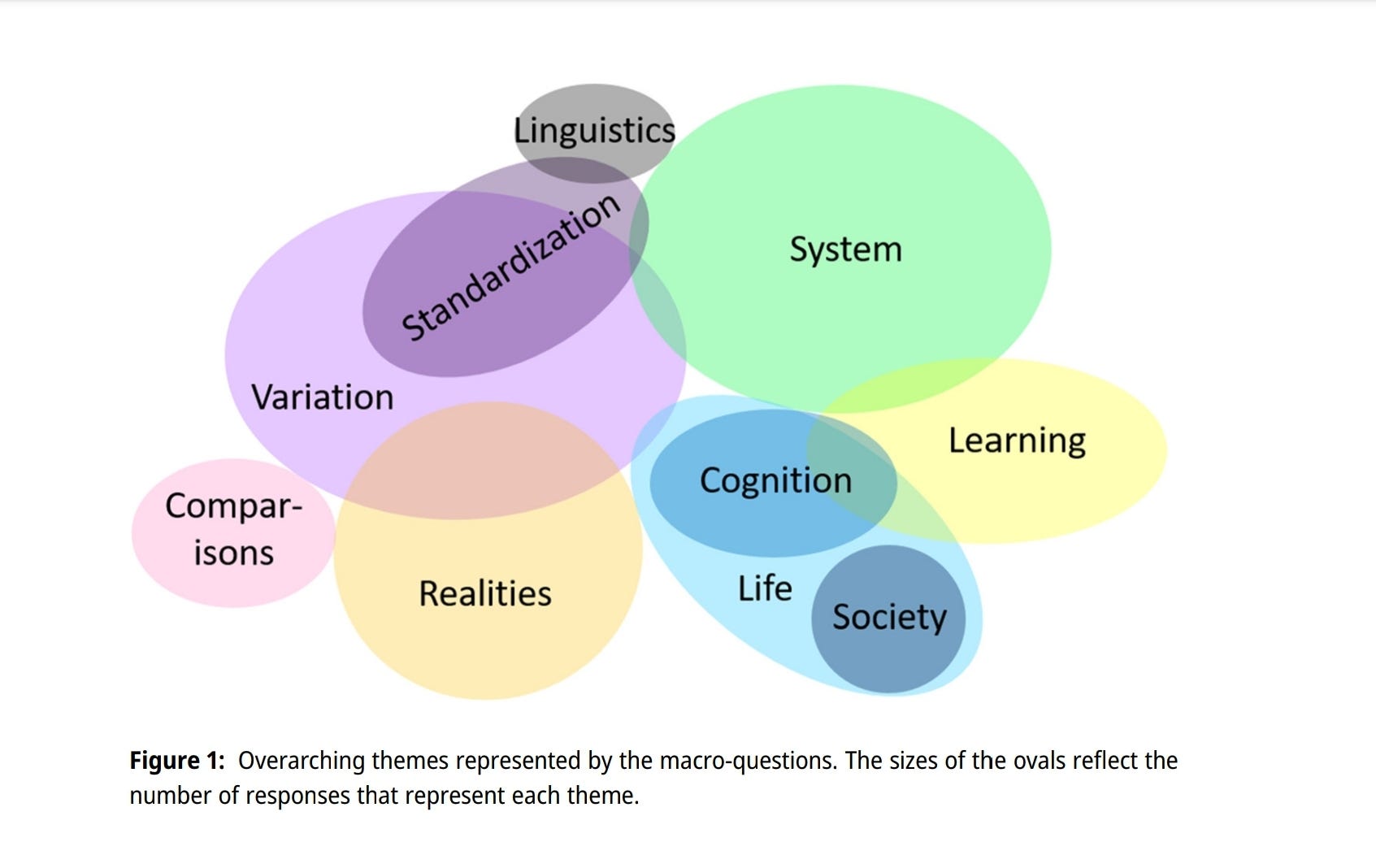
Based on their findings, the scholars remark: “There is no singular issue within the field of linguistics that all – or even most – linguists come to think of when they are asked what everyone should know about language.”
Moving on
As a language user, attempt some of the questions and see if you can answer most. Linguists consider these questions salient, answering them may make you appreciate language (spoken, written or signed) some more as well as the roles language plays in your daily life.
Let's hear what you think :)
Now we need a list of answers to every question!
Amazing article. Really. As a linguist:)